
The Resilience Revolution™ How Protecting Our Kids is Actually Making Them Weaker

This perspective was featured during my April 13, 2026, appearance on ONNJ’s Mornings with Ken Rosato, where I discussed the principles of the Resilience Revolution and the importance of fostering strength and adaptability in today’s youth. https://www.onnj.com/videos/resilience-revolution/

We find ourselves at a critical crossroads in youth wellness. On one hand, we have never been more attuned to the emotional lives of our children; on the other, the data suggests our efforts are not yielding the safety we intended. Approximately 42% of high school students report persistent feelings of sadness or hopelessness, and suicide remains the second leading cause of death for youth aged 10 to 24.
This is the central paradox of modern upbringing: why is a generation that has been so carefully shielded feeling so uniquely fragile? The answer lies in The Resilience Revolution™, a necessary movement to shift our focus from making life easier for our children to making our children stronger through the intentional use of struggle.
The Invisible Toxins: Isolating Tech, Dopamine Dump and Narratives of Doom
There are three "toxins" currently poisoning the well of youth mental health, often operating right under our noses. These factors create a compounding cycle of addiction and learned helplessness.
Isolating Technologies: We have designed a world where human connection is an elective, not a requirement. From self-checkout counters and Peloton bikes to the ubiquity of texting, we have traded micro-moments of social connection—the smiles and greetings that regulate our social nervous systems- for digital efficiency.

Dopamine-Dumping Apps: Digital platforms are engineered to exploit our neurobiology. Dopamine is a healthy chemical in your brain... it’s what makes you happy, motivated, and willing to persevere. But when you use technology that dumps massive amounts of dopamine, you become immune to it. You need more just to feel okay. That is what keeps our children trapped in a cycle of tech-dependency.

Narratives of Doom: Algorithms are not programmed for truth; they are programmed for engagement. A child might start a search wanting to learn about the inspiring work of Jane Goodall, but within days, the algorithm, noticing an interest in the environment, begins feeding them a "narrative of doom" featuring burning rainforests and ecological collapse. This leaves children feeling helpless, wondering, "What’s the point?"

The Parenting Paradox: From Helicopters to Snowplows
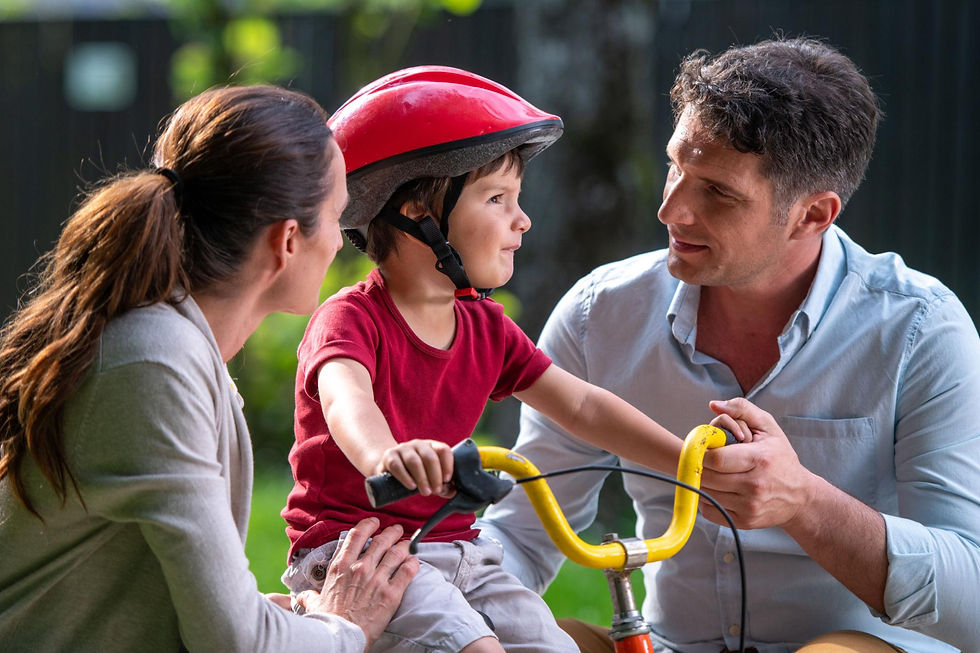
While rooted in deep care, modern parenting styles often inadvertently send messages to a child’s brain that hinder the development of self-regulation and confidence. Confidence is not built through adult reassurance; it is built through the lived experience of overcoming a challenge.
Helicopter Parenting Message to the brain: "I am incapable of handling things on my own."
Snowplow Parenting Message to the brain: "Discomfort is a threat that should be removed immediately."
Bubble Wrap Parenting Message to the brain: "The world is dangerous, and I am fragile." The outcome: This prevents the nervous system from ever learning to regulate stress, keeping the child in a permanent state of "fight or flight."
Uninvolved Parenting Message to the brain: "I am not important enough to notice." The outcome: Without predictable connection, children become hyper-focused on seeking attention to find any semblance of stability.
The 400:1 Problem: Why Tech is No Longer Optional
When these parenting styles collide with a lack of professional school support, we create a vacuum that only technology, if used responsibly, can fill. Nationally, we are 150,000 school counselors short. While the recommended ratio is 400:1, in the worst-case scenarios, we see ratios of thousands to one.
Human resources alone cannot solve a crisis of this scale. We must use responsible tech like Eliza Chat to provide a low-stigma bridge to human help. Students trust technology because it is private and on-demand.
The necessity of such a system is tragically illustrated by the story of a young man who, one night in November, told his parents goodnight and went to bed. Instead of sleeping, he was engaged in four or five different text streams—including one with an ex-girlfriend—expressing his intent to die by suicide. His friends wanted to help but didn't know how. An aunt in another state eventually called the police, but it was too late. The parents, thinking their son was safely asleep, only discovered the truth when officers knocked on the door. A digital reporting tool could have bridged that gap.
This gravity was captured perfectly by a mental health care provider who once told me: "You never know how many you save, but you never forget the ones you lose."
Reclaiming the Playground: Conflict vs. Bullying
Part of The Resilience Revolution™ involves "reclaiming the playground" by properly identifying peer challenges. There is a growing tendency to label every unkind word as "bullying," but peer conflict is distinct from the legal and clinical definition of bullying.
Mislabeling conflict is more than just a semantic error; it is a missed opportunity. Conflict is the "learning laboratory" of childhood. It is where children develop perspective-taking, communication, and the internal tools they will need as adults. By rushing to "save" children from conflict, we steal the very experiences they need to become resilient.
Thriving as a Skill: Supporting the Staff

Resilience is not just for students; it is a survival requirement for the educators who support them. This nation needs you to stay in education, but you cannot pour from an empty cup. When staff feel supported, they are more innovative, take fewer sick days, and—most importantly—they stay.
Tools like Dr. Skinner’s Digital Mind provide educators with 24/7 access to emotional tools and live coaching. This isn't just about stress management; it's about thriving. Thriving is a skill built on three pillars:
Regularly engaging with other humans.
Maintaining a clear sense of purpose.
Having the agency to act on that purpose.
Conclusion: Navigating the River
The core of The Resilience Revolution™ is a fundamental shift in our mission: we must stop trying to make things easier for our kids and start making our kids stronger. We must embrace the productive struggle, allowing children to feel the weight of a challenge so they can learn the strength of their own shoulders.
"We cannot stop the river, but we can equip people with the tools to navigate it safely, confidently, and with purpose."
Call to Action:
Reflect on your day today.
Is there a small struggle you are tempted to "snowplow" away for a child, or even for yourself?
I challenge you to step back.
Allow that struggle to exist.
Resilience is a muscle, and it only grows when it is put to work.


Comments